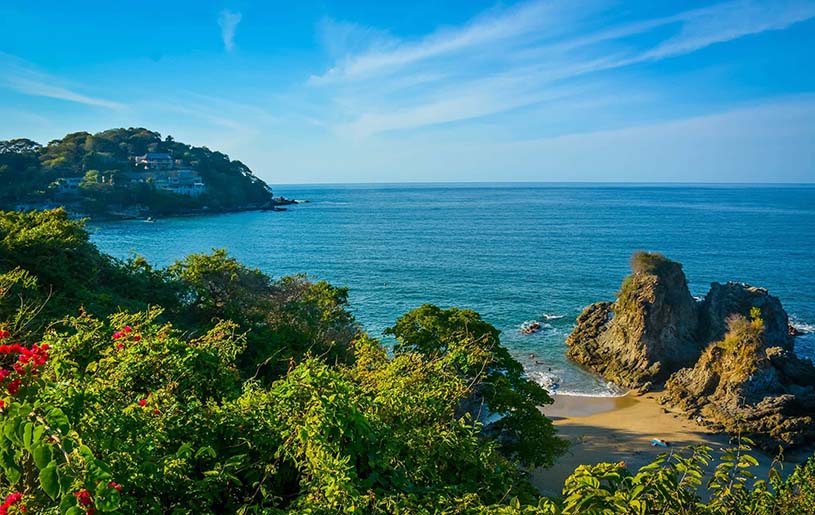
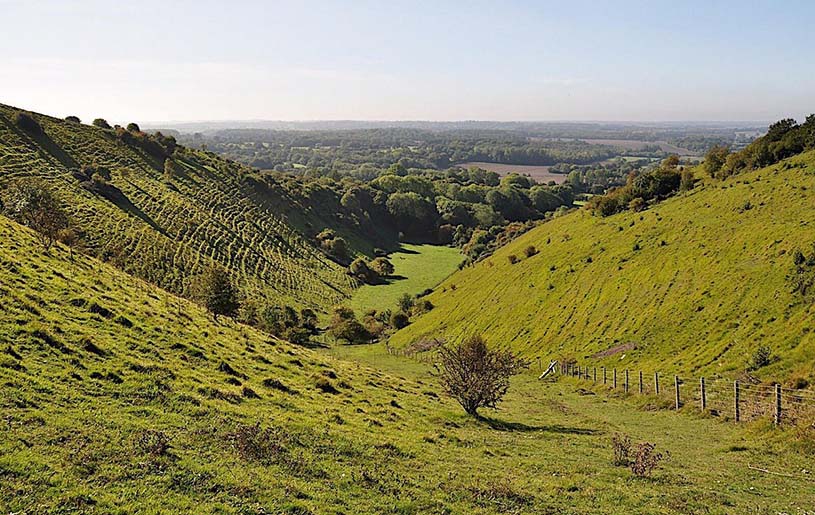
Upon arriving in Lucerne for the first time, I didn’t immediately feel the presence of a bustling “city”; instead, it felt like stepping into a perfectly preserved postcard. Nestled in Central Switzerland and embraced by the Alps, the city boasts lake waters of almost unreal clarity and air so crisp and clean it feels unfamiliar. Compared to the modern, fast-paced vibe of Zurich, Lucerne feels like a version of life where time has slowed down, prompting one to instinctively ease into a more leisurely pace.
For this trip, I deliberately avoided a packed itinerary. I simply wanted to stroll along the lakeshore, visit the Chapel Bridge, ascend Mount Pilatus, and linger casually in the Old Town. It turned out that this unhurried rhythm was the best way to truly appreciate Lucerne.
First Glimpse of Lucerne: Scenery Unfolding from the Train Window
On the train ride from Zurich to Lucerne, the passing scenery began to “preview” the city’s character. Distant mountains gradually came into focus, the lake shimmered with sunlight, and villages were scattered across the valleys like toy blocks placed at random.
As the train slowly pulled into Lucerne Station, I felt a momentary sense of bewilderment. The station sits right by the lake—the water is just a few steps away, with almost no transition between the urban landscape and nature. This seamless connection between city and landscape made me decide the moment I stepped off the train: there was no need to rush here—only a need to walk slowly.
The Chapel Bridge: Lucerne’s Iconic Landmark
The first place I visited was the Chapel Bridge (Kapellbrücke)—a must-see landmark for almost every visitor. Spanning the Reuss River, it is one of the oldest wooden bridges in Europe.
Standing at the bridge’s entrance, my first impression wasn’t one of “grandeur,” but rather a quiet sense of familiarity. The wooden structure bore the patina of age, and the roof was adorned with a series of triangular paintings that told the story of Lucerne’s history.
I walked slowly onto the bridge, the soft creak of wooden planks beneath my feet and the sound of flowing water in my ears. The river water was crystal clear, revealing the bed below; swans occasionally glided by, moving with a leisurely pace that seemed to harmonize with the city’s own rhythm.
I paused midway across the bridge. Sunlight filtered through the gaps in the structure, casting a dappled pattern of light and shadow onto the wooden beams. Instead of snapping numerous photos, I chose to lean against the railing and gaze at the water for a while. In that moment, I realized that the Chapel Bridge was more than just a tourist attraction; it was an integral part of life in Lucerne—a place one simply passes through rather than merely “visits.”
The Lion Monument: Silence Speaks Louder Than Words
A short walk from the Chapel Bridge lies the Lion Monument. Tucked away against a rock face in a small park, it is easily overlooked if one isn’t specifically looking for it.
As I approached, my first reaction was one of awe—not a visual shock, but a quiet, emotional gravity. Carved into the massive rock face was a dying lion; its body seemed deeply embedded in the stone, its expression one of sorrowful restraint.
I stood there for a long time, reluctant to leave. There were few tourists around, and the atmosphere was hushed, broken only by the occasional sound of footsteps. In contrast to the lighthearted vibe of the Chapel Bridge, this place revealed another side of the city’s soul—somber and steeped in history, yet not oppressive.
I sat on a nearby bench, gazing at the sculpture in a trance. The intermittent voice of a tour guide drifted over, but I preferred to experience the monument’s emotional resonance on my own. It felt less like a “tourist attraction” and more like a frozen moment of historical memory.
Strolling Through the Old Town: Wandering Without a Destination
After leaving the monument, I returned to Lucerne’s Old Town (Altstadt). The street layout isn’t complex, yet it is easy to lose one’s way; the alleys look similar at a glance, yet each possesses its own unique details.
Painted facades, cobblestone streets, flowerpots trailing from windowsills, and the occasional passing bicycle all combined to create a scene that felt authentically lived-in.
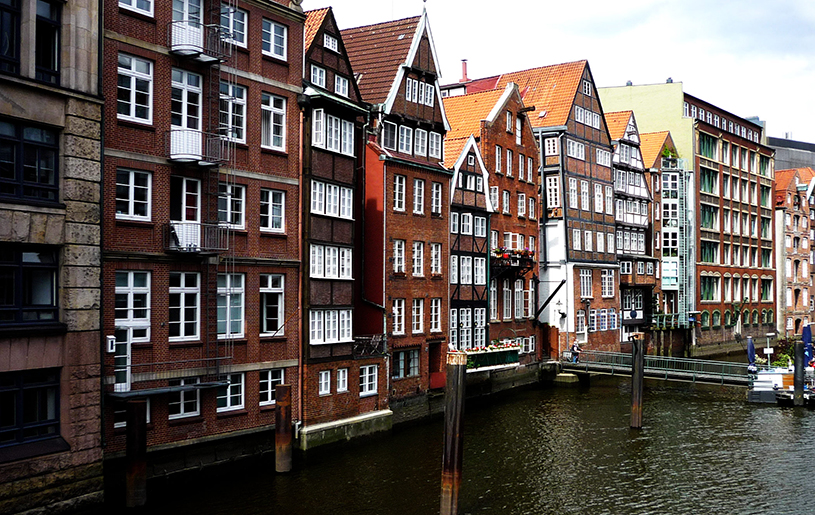
I didn’t plan a specific route; I simply wandered at will. I stopped when I grew tired and stepped into any café that caught my eye to sit for a while.
I remember one small café where the window seat offered a view of the street corner. After ordering a latte, I sat there and watched the passersby. There were plenty of tourists, yet the pace was unhurried; no one seemed in a rush. Even the movements of the waitstaff carried an air of composure.
In that moment, I felt that the charm of Lucerne lay not in what one sees, but in how one spends one’s time there.
A Stroll by the Lake: The City’s Gentlest Side
In the afternoon, I made my way to the shores of Lake Lucerne. It is arguably the most relaxing spot in the entire city.
The lake water displayed a distinctive blue-green hue—not a color achieved through artifice, but its authentic appearance under natural light. Snow-capped peaks in the distance, coupled with pleasure boats and swans nearby, created a scene that felt almost surreal.
I strolled slowly along the lakeside path, occasionally pausing to sit on a bench and gaze out at the water. When the breeze blew, the surface would gently undulate, shifting the interplay of light and shadow.
I also took a short boat ride on the lake. Viewing the city from the water offered a completely different perspective. The architecture of the Old Town, the bridges, and the mountains came into view together, resembling a landscape painting that had been reassembled.
The boat moved leisurely; there was no noise, only the sounds of water and wind. I suddenly realized that this very quietude was, in itself, the most precious experience Lucerne had to offer.
Mount Pilatus: From the City to the Clouds
The next morning, I headed to Mount Pilatus. It is one of Lucerne’s most famous natural attractions and the part of the trip I was most looking forward to.
The weather was fair when I set out from the city, but as the cable car ascended, the scenery began to transform. The lake shrank in the distance, houses dwindled to the size of models, and mountain ranges began to encircle me.
When I finally stood at the summit, I found myself in a completely different world. Clouds drifted beneath my feet, and snow-capped peaks layered the horizon; the wind was biting, yet the air was incredibly crisp and clear.
I lingered at the observation deck for a long time, in no rush to take photos. From every angle, the view was a perfect, complete landscape.
Later, I took a short hike along a mountain trail, occasionally spotting alpine flora by the roadside. Each step was quiet, accompanied only by the sound of the wind.
It was a feeling hard to put into words—one of being both insignificant and free.
The Rhythm of Lucerne: A City Revealed by Slowing Down
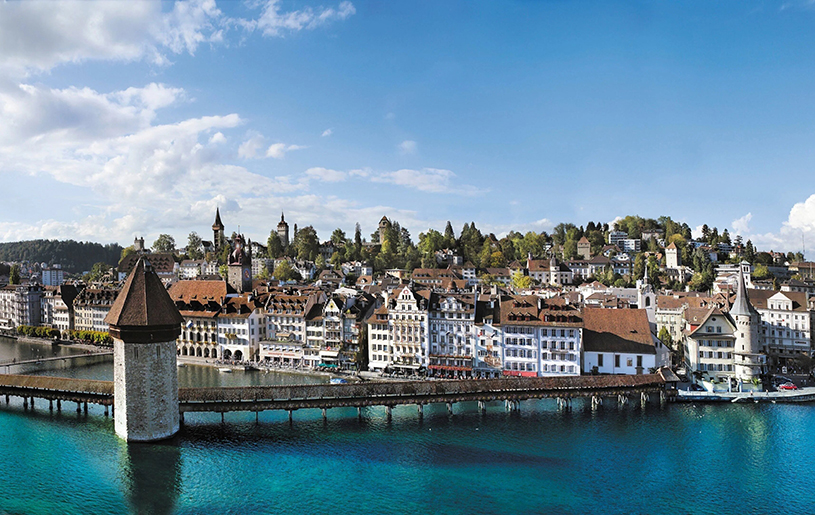
Back in the city center, I found myself walking near the Chapel Bridge again. There were more tourists than in the morning, yet the city maintained its own unhurried pace.
I discovered something unique about Lucerne: it doesn’t force you to “sightsee”; instead, it allows you to blend naturally into the surroundings.
You can explore with intent, or simply do nothing but sit and observe.
Here, travel ceases to be about “checking off boxes” and becomes a state of being.
A Parting Glance: A City Worth Remembering
On the day I left Lucerne, I walked down to the lakeside one last time. The weather was beautiful, and the lake’s surface was as still as a mirror.
I stood there for a long while, only tearing myself away as my train time approached.
Compared to cities defined by high energy and a frenetic pace, Lucerne acts more like a “buffer.” It doesn’t imprint itself on your memory through intensity; rather, it seeps in gradually.
As I boarded the train and the lake receded into the distance, that sense of tranquility remained with me.
I think this is the true charm of Lucerne—it is in no rush to make you remember it; instead, its essence slowly rises to the surface only after you have left.